Head towards the shrine entrance after leaving the station, following signs and the torii gate.
Walk straight along the approach, then turn left and right towards the main shrine. Allow about 15 minutes.
The paired camphor trees are a well-known place to pray for relationships and family harmony.
Allow time to walk to the shrine, pay your respects, browse charms and return along the same route.
Getting there: Meiji-jingumae or JR Harajuku Station
Take the subway to Meiji-jingumae Station or the JR Yamanote Line to Harajuku Station. At Meiji-jingumae, look for exits towards JR Harajuku, Meiji Jingu or Yoyogi Park. From JR Harajuku, head towards Jingu Bridge and the torii gate.
The station is close to the entrance; the main shrine is farther inside the grounds. Allow around 10–15 minutes to walk through the tree-lined South Approach, with extra time for photographs.
Walking route: the South Approach to the main shrine
After entering, follow the South Approach straight ahead. At the junction, turn left, then right into the main shrine forecourt. This is a straightforward route for a first visit.
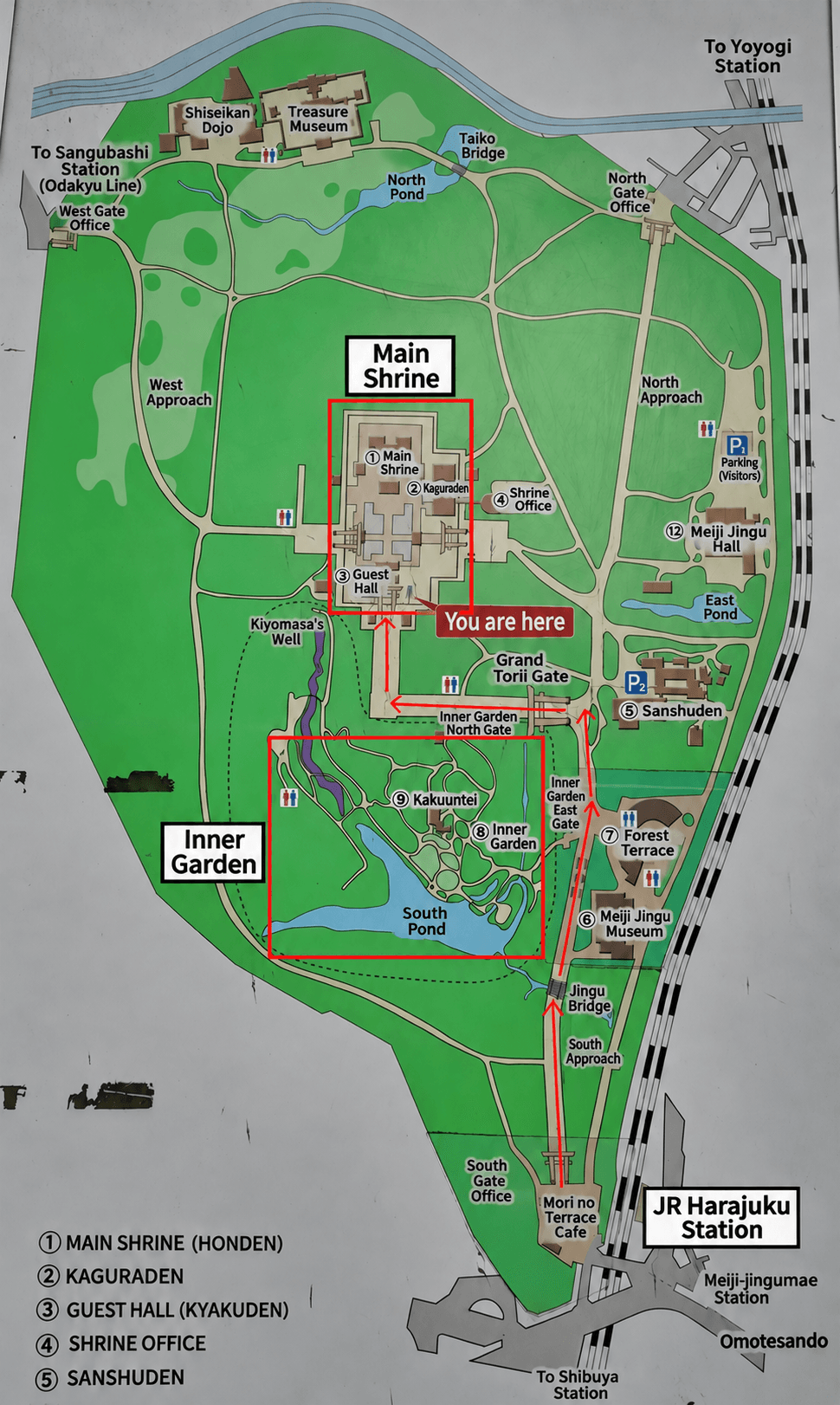
| Step | Place | What to do | Useful tip |
|---|---|---|---|
| 1 | Shrine entrance | Arrive from Meiji-jingumae or JR Harajuku | Follow the signs towards the shrine and torii gate after leaving either station. |
| 2 | South Approach | Walk straight into the forest | The shaded approach is fairly long. Allow around 10–15 minutes to reach the main shrine area. |
| 3 | Left, then right | Follow signs for the main shrine | Turn left at the approach junction, then right into the forecourt. |
| 4 | Main shrine & paired camphor trees | Pay your respects and see the sacred trees | The paired trees are associated with prayers for relationships and family harmony. |
| 5 | Charm counter | Browse omamori, ema and poem slips | Look to the right of the shrine area. Follow on-site instructions for formal prayer services and offerings. |
| 6 | Return to the entrance | Walk back towards Harajuku | Retrace the South Approach, then continue to Harajuku, Omotesando or Shibuya. |
South Approach: a forest walk beside the city
Although Harajuku is just outside, the shrine grounds quickly feel quieter. Tall trees line the approach, making this a gentle start before exploring Harajuku and Shibuya.
Main shrine: pause and pay your respects
Visit the main shrine area, then decide whether to write an ema prayer plaque or pick up a poem slip. Leave time to enjoy the space and atmosphere rather than rushing through for photographs.
Paired camphor trees: relationships and family harmony
The two camphor trees beside the shrine are joined by a sacred shimenawa rope. They represent harmony in marriage and family life and are a well-known place for visitors to offer prayers.
Charm counter: omamori and ema
After paying your respects, browse the area to the right for omamori protective charms, ema prayer plaques and poem slips. For formal prayers or offerings, follow the instructions provided on site.
Return along the same approach
A first visit does not need a full circuit of the grounds. Retrace your route to Harajuku or Meiji-jingumae Station, then continue to Takeshita Street, Omotesando, Cat Street or Shibuya.
How to plan your visit
A one-hour shrine visit
- Arrive at Meiji-jingumae or JR Harajuku Station.
- Walk along the South Approach, then turn left and right towards the main shrine.
- Pay your respects and see the paired camphor trees.
- Browse charms, ema or poem slips at the counter to the right.
- Return along the same approach.
Half a day: Meiji Jingu, Harajuku & Shibuya
Start with Meiji Jingu in the morning or around midday, then explore Takeshita Street in Harajuku, Omotesando and Cat Street before continuing to Shibuya. Spend the afternoon shopping and finish around Shibuya Crossing or SHIBUYA SKY in the evening.
Explore more of Tokyo
Combine Meiji Jingu with Harajuku, Omotesando and Shibuya. Check the area guide and observation-deck booking options before choosing transport tickets.
Meiji Jingu: frequently asked questions
Which station is best for Meiji Jingu?
Meiji-jingumae Station on the subway and Harajuku Station on the JR Yamanote Line are convenient for entering from the South Approach.
How long is the walk from the entrance to the main shrine?
Allow around 10–15 minutes for the walk from the entrance. Add more time if you want to stop for photographs.
What order should I visit the shrine in?
Enter the South Approach and walk straight ahead, then turn left and right towards the main shrine. Pay your respects, see the paired camphor trees, browse charms or ema to the right and return along the same route.
How much time should I allow at Meiji Jingu?
Around one hour works for the South Approach, main shrine, paired camphor trees and charm counter. Allow longer for more photographs, the Inner Garden or the museum.
Can I visit Meiji Jingu, Harajuku and Shibuya on the same day?
Yes. Start at Meiji Jingu in the morning or around midday, continue through Takeshita Street, Omotesando and Cat Street, then spend the afternoon and evening in Shibuya.