Senso-ji GuideStart at the free viewing terrace, then walk from Kaminarimon to the main hall
Senso-ji offers more than a photo at Kaminarimon. Start on the eighth floor of Asakusa Culture Tourist Information Center for views across Asakusa and towards Skytree, then visit Kaminarimon, Nakamise, Hozomon, the five-storey pagoda and the main hall.
Head towards Kaminarimon after leaving the station; the main temple area is close by.
Start with a panoramaFree eighth-floor terrace at the tourist information centre
See Skytree, Nakamise and the Senso-ji precinct.
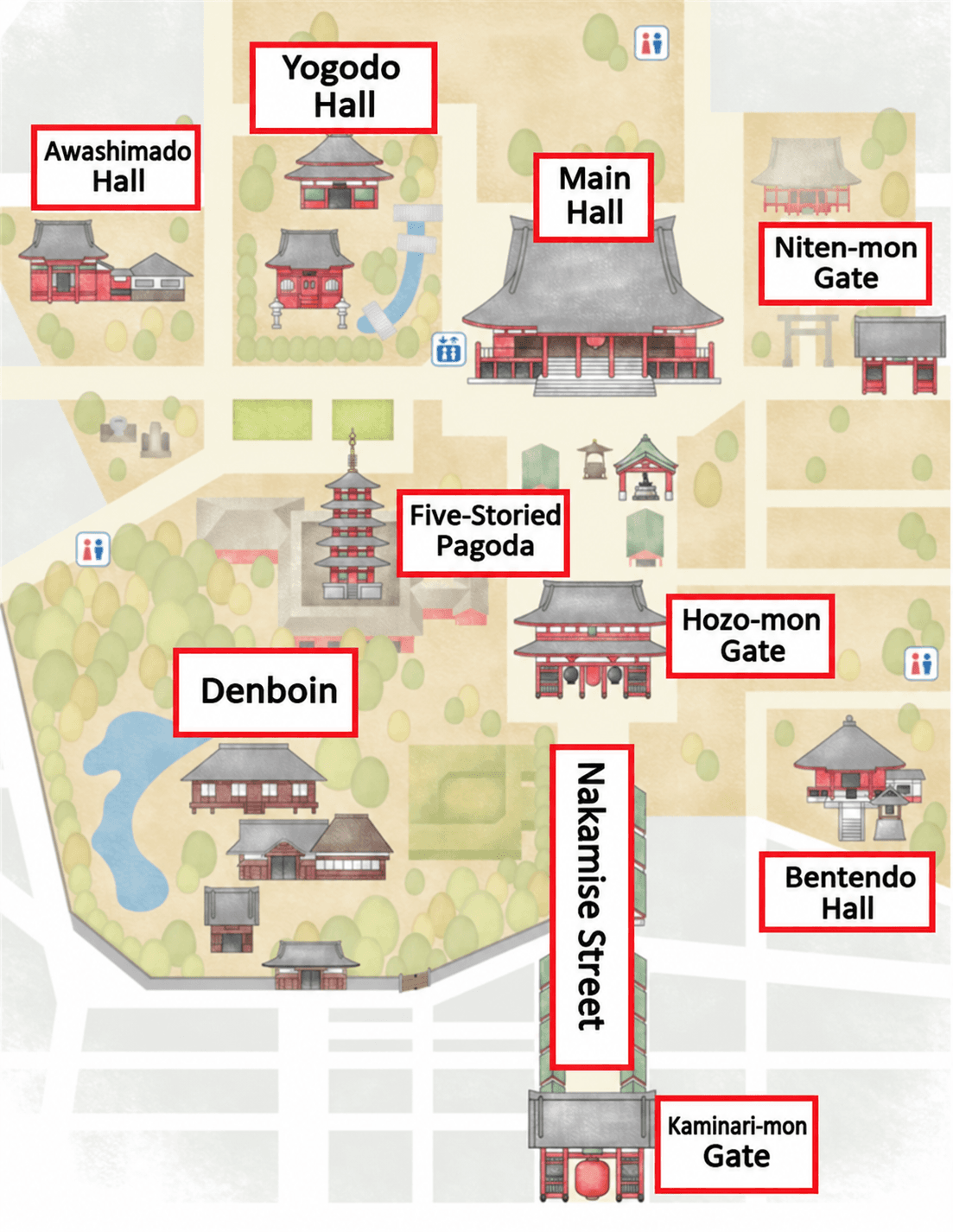
Main routeKaminarimon → Nakamise → Hozomon → Pagoda → Main hall
Follow this route on a first visit to cover the classic sights.
With extra timeYogodo, Awashimado, Denboin, Nitenmon and Bentendo
Explore these quieter parts of Senso-ji if time allows.
Before photographing Kaminarimon, go up to the eighth-floor terrace
Take Asakusa Station exit 1 or A4 towards Kaminarimon. Although many visitors start photographing the gate immediately, I suggest visiting Asakusa Culture Tourist Information Center across the street first.
Its free eighth-floor terrace overlooks Skytree, the streets by Kaminarimon, Nakamise and the temple precinct. Seeing the layout from above helps with orientation and photo angles once you return to street level.
Keep your first visit simple: photograph Kaminarimon, follow Nakamise to Hozomon, stop by the five-storey pagoda, then visit the main hall for worship, fortunes and amulets.
Senso-ji guide map: locate Kaminarimon, Nakamise, Hozomon, the pagoda and main hall first, then decide whether to explore the smaller halls.
Order
Place
Highlights
Tip
1
Kaminarimon
The giant lantern, wind and thunder gods, and a classic first photo
Photograph the front, then look behind and underneath the lantern for the dragon carving.
2
Nakamise Shopping Street
Shopping, souvenirs and snacks along the approach
Avoid stopping in the middle of the crowd. Stand to one side or look back for street photos.
3
Hozomon
The gateway into the main temple precinct
Hozomon is at the end of Nakamise; the giant straw sandals beside the gate are distinctive.
4
Five-storey Pagoda
Photograph it with Hozomon and the main hall
The pagoda stands beside the main route; portrait framing works well with the sky and eaves.
5
Main Hall
Worship, fortune slips and amulets
Draw a fortune here if you wish. Follow the posted instructions for tying an unwanted slip in the designated place.
Kaminarimon: the iconic entrance lantern
Kaminarimon is Senso-ji's classic entrance, with its giant lantern. When crowded, try angled views, the back and the underside of the lantern before returning for a front-facing photo.
Nakamise: shopping and snacks
Beyond Kaminarimon, Nakamise is lined with Japanese sweets, rice crackers, souvenirs, household goods and snacks. It is lively and often congested. Stop to the side to eat rather than blocking the centre of the street.
Hozomon: the main gateway
At the end of Nakamise, Hozomon marks a striking entrance to the main temple precinct. Photograph the gate, eaves and giant straw sandals; this is also a good place to look back over Nakamise.
Five-storey Pagoda: an easy stop beside the route
The pagoda is beside the main approach, without a long detour. Try a portrait composition with the tower, eaves and sky. Stepping farther back can produce a clearer view when it is busy.
With more time: Yogodo, Awashimado, Denboin, Nitenmon and Bentendo
After the main route, there is no need to rush away. Smaller sights around Senso-ji offer a quieter walk away from Kaminarimon and Nakamise.
Extra stop
Why visit
When to add it
Yogodo Hall
Add this quieter hall if you want a goshuin seal or a calmer temple visit.
After visiting the main hall.
Awashimado Hall
A small hall with a calmer pace away from the busiest route.
Add it with 10–15 minutes to spare.
Denboin
The exterior and surroundings have a traditional garden atmosphere. Garden access depends on current opening arrangements.
Prioritise it when the garden is open.
Nitenmon Gate
An atmospheric historic gate beside the main route.
Photograph it while heading towards Asakusa Shrine.
Bentendo Hall
Usually quieter than Kaminarimon and Nakamise, making a peaceful finish.
After the main hall, if you still have energy.
Planning Your Senso-ji Visit
One-hour quick visit
Leave Asakusa Station and first visit the eighth-floor viewing terrace.
Return to street level to photograph Kaminarimon.
Walk through Nakamise to Hozomon and the five-storey pagoda.
Visit the main hall before leaving.
Comfortable two- to three-hour visit
Start at the free terrace for views of Skytree and Asakusa.
Take your time at Kaminarimon and Nakamise, with snacks or souvenir shopping.
Visit Hozomon, the pagoda and the main hall.
Add Yogodo, Awashimado, Nitenmon or Bentendo.
Half-day: Senso-ji and Skytree
For a half-day, combine Senso-ji with Skytree. Visit the temple in the morning or around midday, then walk by the Sumida River or travel to Oshiage. Explore Tokyo Solamachi and the Skytree observation decks, finishing with night views.
From the Tokyo Metro Ginza Line, use exit 1 towards Kaminarimon. From the Toei Asakusa Line, look for exit A4. Locate Kaminarimon and Asakusa Culture Tourist Information Center after leaving the station; the route is straightforward.
QIs the eighth floor of Asakusa Culture Tourist Information Center worth visiting?
Yes, and it is free. Across from Kaminarimon, the eighth-floor viewing terrace overlooks Skytree, the Nakamise axis and the Senso-ji area. Visit first for an overview before exploring on foot.
QWhat order should I visit Senso-ji in?
Follow Kaminarimon, Nakamise, Hozomon, the five-storey pagoda and the main hall. With extra time, add Yogodo, Awashimado, Denboin, Nitenmon and Bentendo.
QHow long should I allow for Senso-ji?
Allow about an hour for the main route. Two to three hours is more comfortable with the eighth-floor terrace, photos, snacks and amulet shopping. Allow half a day if continuing to Skytree or the Sumida River.
QCan I combine Senso-ji with Skytree?
Yes. They are close enough to visit Asakusa in the morning or around midday, then continue to Skytree and Tokyo Solamachi in the afternoon and evening, ending with night views.
Main Hall: worship, fortunes and amulets
Finish at the main hall for worship, fortune slips, amulets and the temple atmosphere. Mornings are generally more comfortable for walking; evenings bring illuminated buildings and atmospheric streets.