For a first visit, follow Niomon Gate, Sai-mon Gate and the Three-Story Pagoda, the Main Hall's Kiyomizu stage, Okuno-in and Otowa Waterfall to cover the classic views. Allow about an hour for the main grounds, then extend to Ninenzaka, Sannenzaka and Yasaka Pagoda according to your energy.
Niomon Gate > Three-Story Pagoda > Main Hall > Okuno-in > Otowa Waterfall.
Allow another 30-60 minutes for peak-season queues, photos or the Koyasu Pagoda.
Usually extended to 18:30 in July and August. Special visits follow official notices.
Elementary and junior-high students: 200 yen. Special openings may cost extra.
Kiyomizu-dera is on a Higashiyama hillside, without a railway station directly beside it. From Kyoto Station, the most straightforward option is a bus to Gojozaka or Kiyomizu-michi, followed by a 10-15-minute uphill walk along Kiyomizu-zaka. The temple website lists bus 206. On weekends and public holidays, also check that day's sightseeing express bus services such as EX100 and EX101.
| Starting Point / Method | Arrival Stop | Best Suited To |
|---|---|---|
| Bus from Kyoto Station | Gojozaka / Kiyomizu-michi | Fewer transfers, but possible traffic and full buses in peak season |
| JR + Keihan Railway | Kiyomizu-gojo Station | More predictable travel, followed by about a 25-minute walk |
| Subway + Walking | Higashiyama Station | A walk through Gion, Yasaka Shrine, Ninenzaka and Sannenzaka |
Kyoto's official guidance warns that buses from Kyoto Station to Gojozaka are often congested. To avoid traffic, take JR to Tofukuji and change to Keihan, then walk from Kiyomizu-gojo Station. Before setting out, check Kyoto's Official Kiyomizu-dera Transport Advice.
The temple also warns that map apps sometimes direct visitors to roads without access to the grounds. Ordinary visitors should use Niomon Gate at the top of Kiyomizu-zaka or the entrance at the top of Chawan-zaka. For the exact locations, follow Kiyomizu-dera's Official Access & Entrance Guide.
Niomon Gate > Sai-mon Gate and Three-Story Pagoda > Main Hall (Kiyomizu stage) > Okuno-in > Otowa Waterfall > Downhill is the most convenient main route for a first visit. For a longer walk, continue from Okuno-in to Koyasu Pagoda, then return towards Otowa Waterfall.
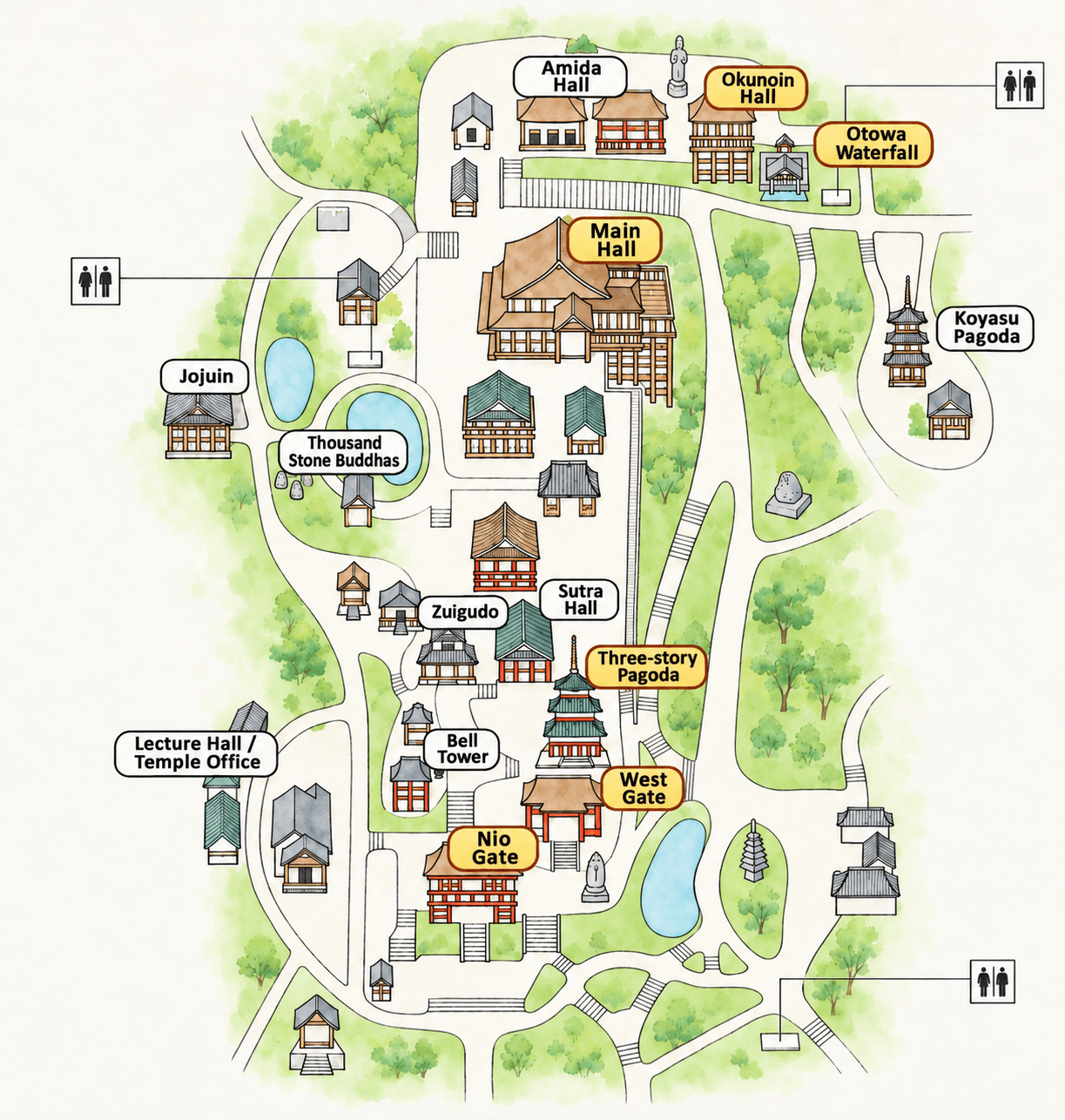
At the top of Kiyomizu-zaka, the vermilion Niomon Gate comes into view as the temple's main entrance. The current gate was rebuilt around 1500, with dismantling and restoration completed in 2003. It is usually crowded; after photos, continue towards Sai-mon and the Three-Story Pagoda without blocking the entrance.
Sai-mon and the Three-Story Pagoda are the striking vermilion buildings after entering the grounds. Sai-mon is known for sunset views, and the pagoda is one of the temple's signature photographic subjects. Continue past Zuigu-do, the Sutra Hall and Todoroki-mon to the Main Hall area.
The Main Hall stands on the steep slopes of Mount Otowa. Rebuilt in 1633, it enshrines the Eleven-Headed, Thousand-Armed Kannon. The famous Kiyomizu stage uses traditional timber supports and overlooks Kyoto, wooded hills and seasonal scenery. It is a centre for worship and viewing, not just a photo platform.
Continue along the worship route from the Main Hall to Okuno-in directly above Otowa Waterfall. Its own wooden stage faces the Main Hall and Kyoto, bringing the Kiyomizu stage, wooded hills and city into one frame. This is the angle often used for the classic photographs.
Take the stairs down from Okuno-in to Otowa Waterfall. The name Kiyomizu, meaning clear water, comes from this stream. Official information describes collecting its three streams with long-handled ladles to purify the six senses and pray. Although travel accounts assign studies, romance and health or longevity to individual streams, the official website does not. Follow the queue and on-site instructions.
For each building's history and location, also consult Kiyomizu-dera's Official Grounds Guide.
| Regular Admission | Adults: 500 yen; elementary and junior-high students: 200 yen |
|---|---|
| Regular Opening Hours | 06:00-18:00; usually until 18:30 in July and August |
| Special Night Visits | Extended hours on selected spring, summer and autumn dates; dates and last admission change each year |
| Suggested Time in the Grounds | About one hour; allow 1.5-2 hours in peak season or with Koyasu Pagoda |
| Combine with Higashiyama | Allow at least another 1-2 hours for Ninenzaka, Sannenzaka and Yasaka Pagoda |
Kiyomizu-dera usually opens at 06:00, but amulet and goshuin services start around 08:00. Arrive early to avoid crowds; if buying amulets or receiving goshuin is your main purpose, you need not enter immediately at opening. Before visiting, check closing times, night visits and special openings in Kiyomizu-dera's Latest Opening Hours.
After Otowa Waterfall, return to Kiyomizu-zaka without rushing onto transport. For a first Kyoto trip, the most natural continuation follows Sannenzaka, Ninenzaka & Ichinenzaka slowly downhill towards Yasaka Pagoda, Kodai-ji and Yasaka Shrine, ending with a meal in Gion or Shijo-Kawaramachi. There are many slopes, stone steps and shops along the way. Wear comfortable shoes and do not stop in the middle of the street for photos.
Pair Kiyomizu-dera with Ninenzaka, Sannenzaka, Yasaka Pagoda and Yasaka Shrine in the same day. Read the area guide first, then decide whether to start from Kyoto Station, Gion or Kawaramachi.
Allow about one hour for Niomon Gate, Sai-mon Gate, the Three-Story Pagoda, Main Hall, Okuno-in and Otowa Waterfall. Add one or two hours for peak-season queues, leisurely photos or Ninenzaka, Sannenzaka and Yasaka Pagoda.
The nearest railway station is Keihan Kiyomizu-gojo Station, but the temple is still about a 25-minute uphill walk away. By bus, get off at Gojozaka or Kiyomizu-michi and walk about 10-15 minutes.
Ordinary visits do not require advance reservations; buy admission on site. Dates, hours and fees may differ for special night visits, special openings of Joju-in Garden and individual events. Check official notices before setting out.
Kiyomizu-dera usually opens at 06:00. Arrive early to avoid tour groups and crowds on Kiyomizu-zaka. However, amulet and goshuin services generally start around 08:00, so do not arrive too early if these are your priority.
Travel accounts commonly associate them with studies, romance and health or longevity. However, the temple's official website does not assign a fixed benefit to each stream. It describes using the clear water to purify the six senses and pray for wishes. Follow the on-site route and instructions.