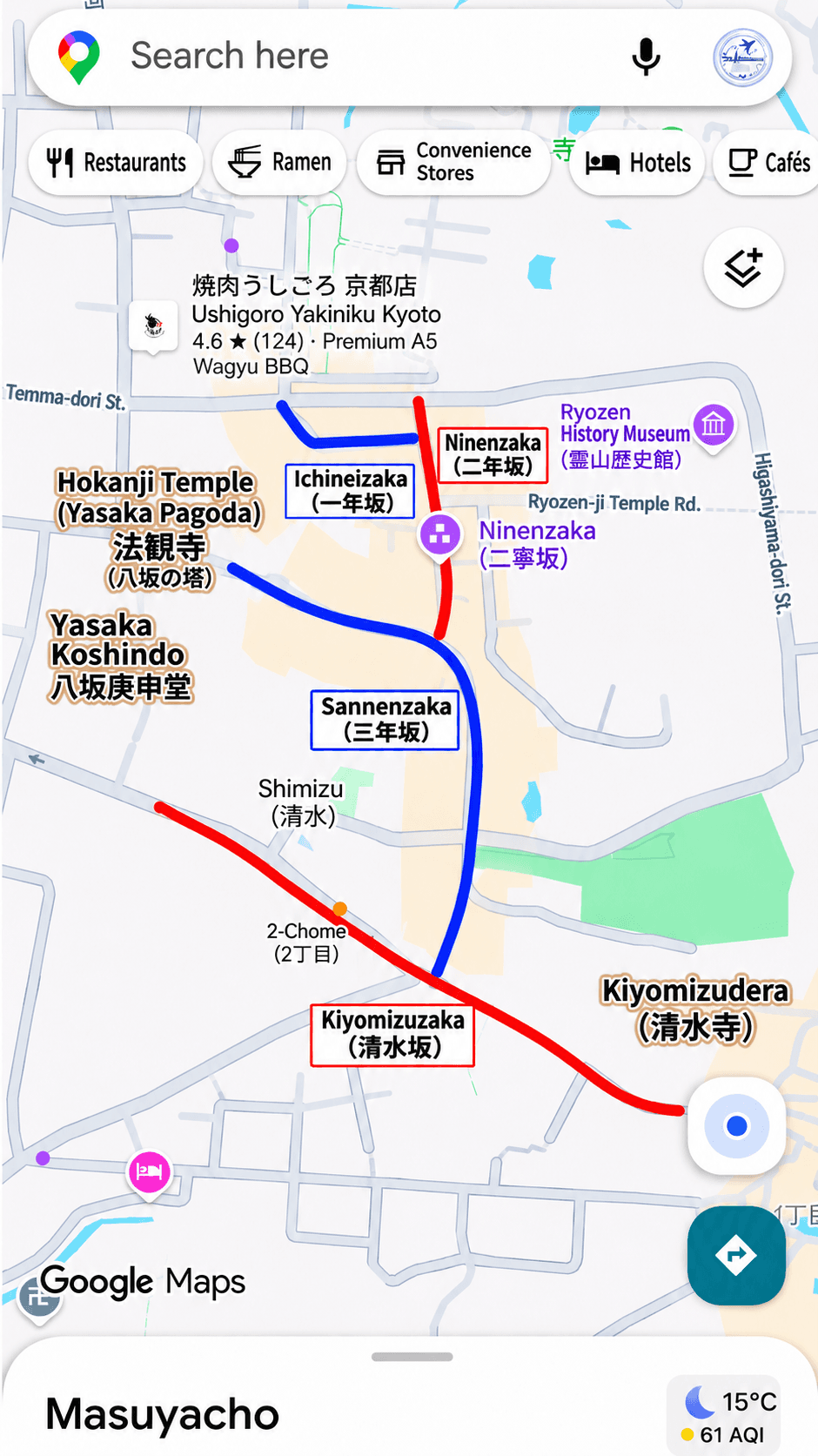
For a first Higashiyama walk, start at Kiyomizu-dera and descend via Kiyomizu-zaka, Sannenzaka, Ninenzaka and Ichinenzaka. Add Yasaka Pagoda, Kodai-ji and Yasaka Shrine as time allows. This guide explains the names, locations, route and crowd considerations together.
Kiyomizu-zaka > Sannenzaka > Ninenzaka > Ichinenzaka.
Walking without stops is quicker; allow more time for photos, shops and food.
Temples, gardens and individual facilities may charge separately.
Most shops will still be closed; visit later in the morning for shopping.
After visiting Kiyomizu-dera, descend along its main approach, Kiyomizu-zaka, then turn onto Sannenzaka and continue to Ninenzaka and Ichinenzaka. This downhill route is easy to follow on a first visit and takes in busy shopping streets, stone steps and quieter townhouse lanes.

Kyoto's official guide also presents Kiyomizu-dera, Sannenzaka and Ninenzaka as a classic Higashiyama walk, while reminding visitors that this is a residential neighbourhood. Do not set up tripods, block streets or enter private spaces for photos. See Kyoto's Official Early-Morning Higashiyama Walk.
Kiyomizu-zaka descends from Kiyomizu-dera's Niomon Gate, lined with souvenir, snack, ceramics and gift shops. It is usually the busiest part of the walk. On the way down, look for the turn right onto Sannenzaka rather than walking straight back to the bus stop and realising you missed it.
Sannenzaka is also commonly known formally as Sanneizaka (産寧坂), written as 産寧坂 in Japanese, with historical spellings including 三寧坂 and 再念坂. Stone steps and curving slopes lined with traditional townhouses form one of Higashiyama's signature streetscapes. Several explanations exist for the name. Kyoto's official account also links it to beliefs surrounding Koyasu Pagoda at Kiyomizu-dera, where people pray for safe childbirth. You need not treat the folk tale of bad luck after falling as a real taboo; simply watch your footing. For its naming history, see Kyoto's Official Sannenzaka History.
Below Sannenzaka's steps is Ninenzaka, also formally written as Nineizaka (二寧坂). Compared with Sannenzaka's stairways, it feels more like a continuous traditional shopping street, with cafes, sweets and souvenir shops. The well-known Starbucks Coffee Kyoto Ninenzaka Yasaka Chaya occupies a Japanese building more than a century old and has tatami seating. Check opening hours and entry restrictions on Starbucks' Official Store Page, and do not block the street by queuing at the entrance.
Ichinenzaka is also commonly written as Ichineizaka (一念坂) and lies north of Ninenzaka, leading towards Kodai-ji and Nene no Michi. It is shorter and has fewer shops and visitors than Sannenzaka and Ninenzaka, offering a slower townhouse photo walk after the busier streets. Continue north from here for Kodai-ji or Yasaka Shrine.
Kyoto City treats Sanneizaka and Ninenzaka's stone steps, paving and surrounding traditional buildings as important parts of the historic streetscape. The conservation area also includes Yasaka Pagoda, Kodai-ji and Ishibe-koji. For the preservation background, read Kyoto City's Sanneizaka Traditional Buildings Preservation Plan.
| Attractions | Location & Highlights | How to Include It |
|---|---|---|
| Hokan-ji (Yasaka Pagoda) | Higashiyama's classic five-storey pagoda streetscape | Detour west between Sannenzaka and Ninenzaka |
| Yasaka Koshin-do | Known for colourful kukurizaru wish charms | Beside Yasaka Pagoda; visit them together |
| Kodai-ji | Gardens, historic buildings and seasonal night visits | Continue north after Ichinenzaka |
| Yasaka Shrine | Gion's landmark shrine, with connections to Hanamikoji and Shijo-Kawaramachi | Continue north after Kodai-ji and Nene no Michi |
Half-day route: Kiyomizu-dera > Kiyomizu-zaka > Sannenzaka > Yasaka Pagoda and Yasaka Koshin-do > Ninenzaka > Ichinenzaka > Kodai-ji > Yasaka Shrine. Stop at Ichinenzaka if you only want old-street photographs. To continue all the way to Gion, allow at least 3-4 hours for the whole route.
Forward route: Visit Kiyomizu-dera first, then walk downhill to Gion for the most straightforward route. Take a bus to Gojozaka or Kiyomizu-michi and walk uphill to start. If traffic is a concern, take Keihan to Kiyomizu-gojo Station and walk instead.
Reverse route: Start from Keihan Gion-shijo, Hankyu Kyoto-kawaramachi or Higashiyama Subway Station, then walk via Yasaka Shrine, Kodai-ji, Ichinenzaka, Ninenzaka and Sannenzaka up to Kiyomizu-dera. This involves more climbing, but lets you explore quieter Gion and Higashiyama streets in the morning and reach the temple later.
Kyoto's official advice is not to rely solely on direct buses from Kyoto Station in busy seasons. Rail plus walking usually makes timing easier. See Kyoto's Official Kiyomizu-dera & Higashiyama Transport Guide for Avoiding Crowds.
Read the Kiyomizu-dera grounds route first, then group Sannenzaka, Ninenzaka and Gion into the same outing. Plan Fushimi Inari or Arashiyama on separate days.
Walking from Kiyomizu-dera via Kiyomizu-zaka, Sannenzaka and Ninenzaka to Ichinenzaka takes about 30-45 minutes without stops. Allow 1-2 hours for photos, food and shopping, or half a day if adding Yasaka Pagoda, Kodai-ji and Yasaka Shrine.
No. All three are ordinary streets open for strolling. Temples, gardens, exhibitions and individual facilities along the route may charge admission, and shops have their own opening hours.
The most convenient downhill route is Kiyomizu-dera > Kiyomizu-zaka > Sannenzaka (Sanneizaka) > Ninenzaka (Nineizaka) > Ichinenzaka (Ichineizaka). Continue afterwards to Kodai-ji, Nene no Michi and Yasaka Shrine.
For quiet streets, visit early in the morning, though most shops and cafes will not yet be open. For browsing and eating, visit from later morning through the afternoon. At busy times, do not use tripods, block roads or disturb residents.
Large luggage is not recommended: Sannenzaka has stone steps, and the route includes slopes and stone paving. Strollers can use some sections but require detours or lifting at stairs. Paving becomes slippery in the rain, so wear comfortable shoes with good grip.